NOMNOM
NOMNOM is an online platform to buy your groceries online and get them delivered to your doorstep. The aim of the experience is to provide a seamless and intuitive user experience to the app users. This flow will be showcasing the experience of a guest checkout.
Client:
NOMNOM
Year:
2024
Industry:
E-commerce
Duration:
2 Weeks
Services:
UI/UX Design, Branding
Overview:
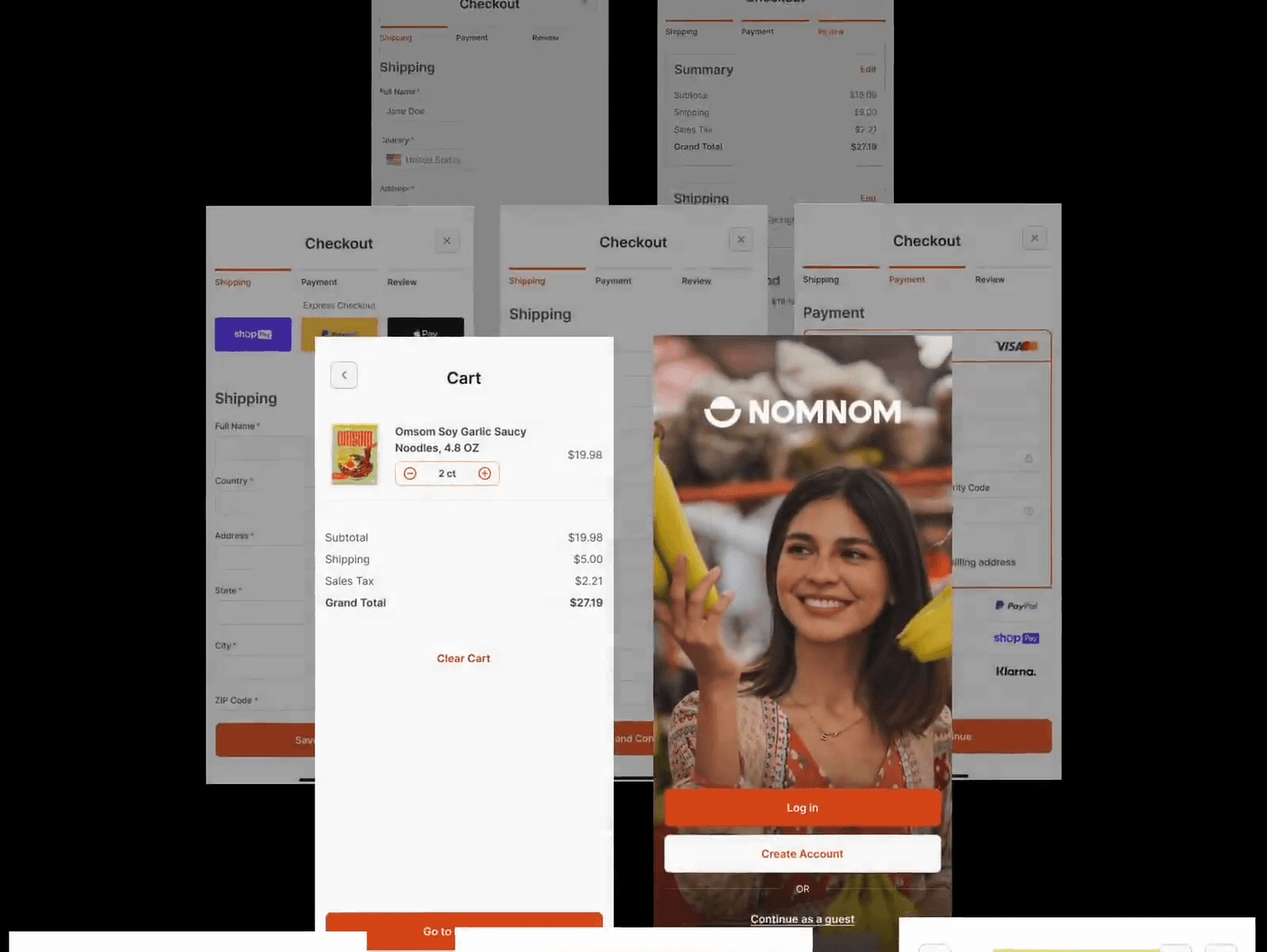
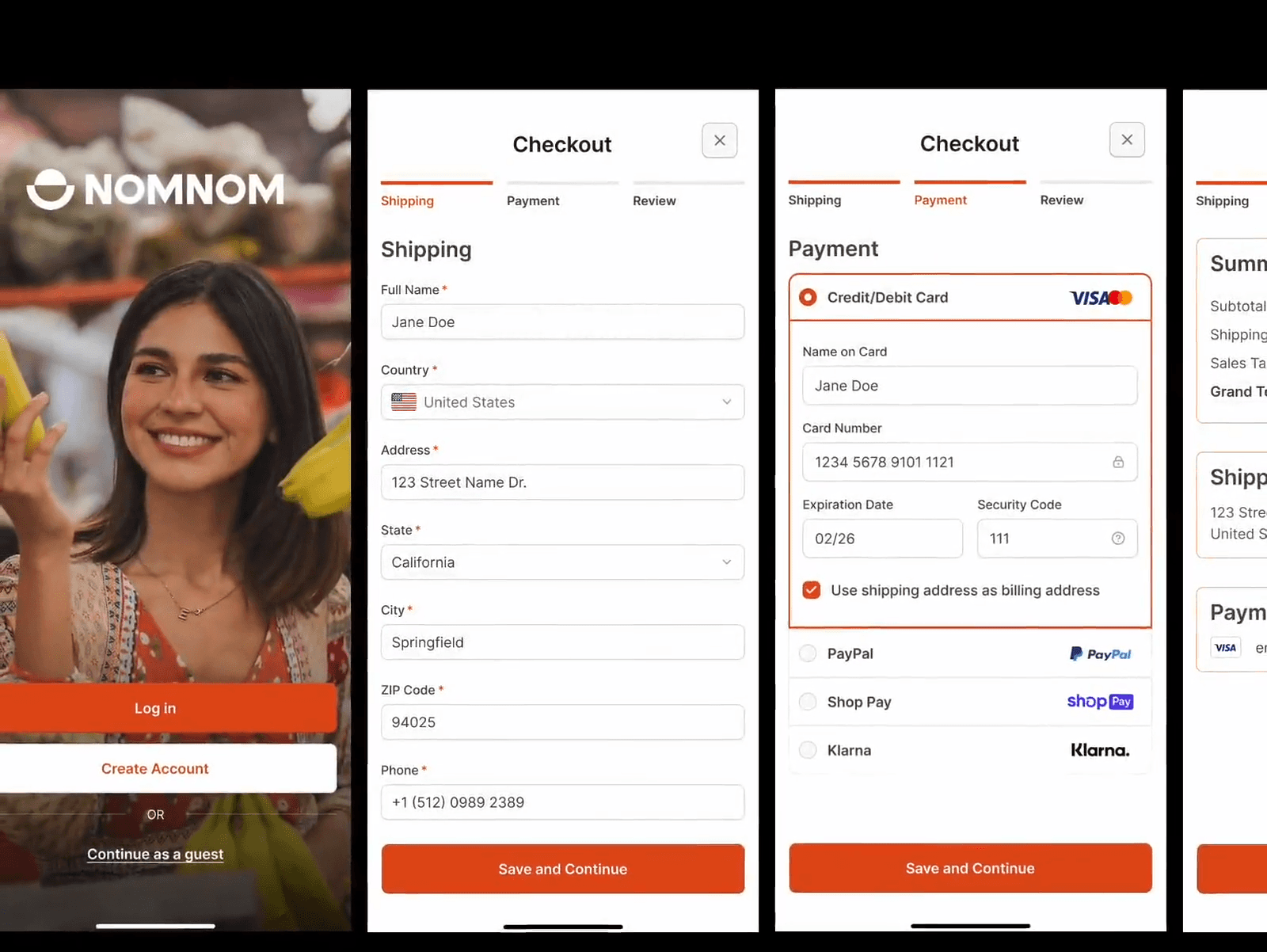
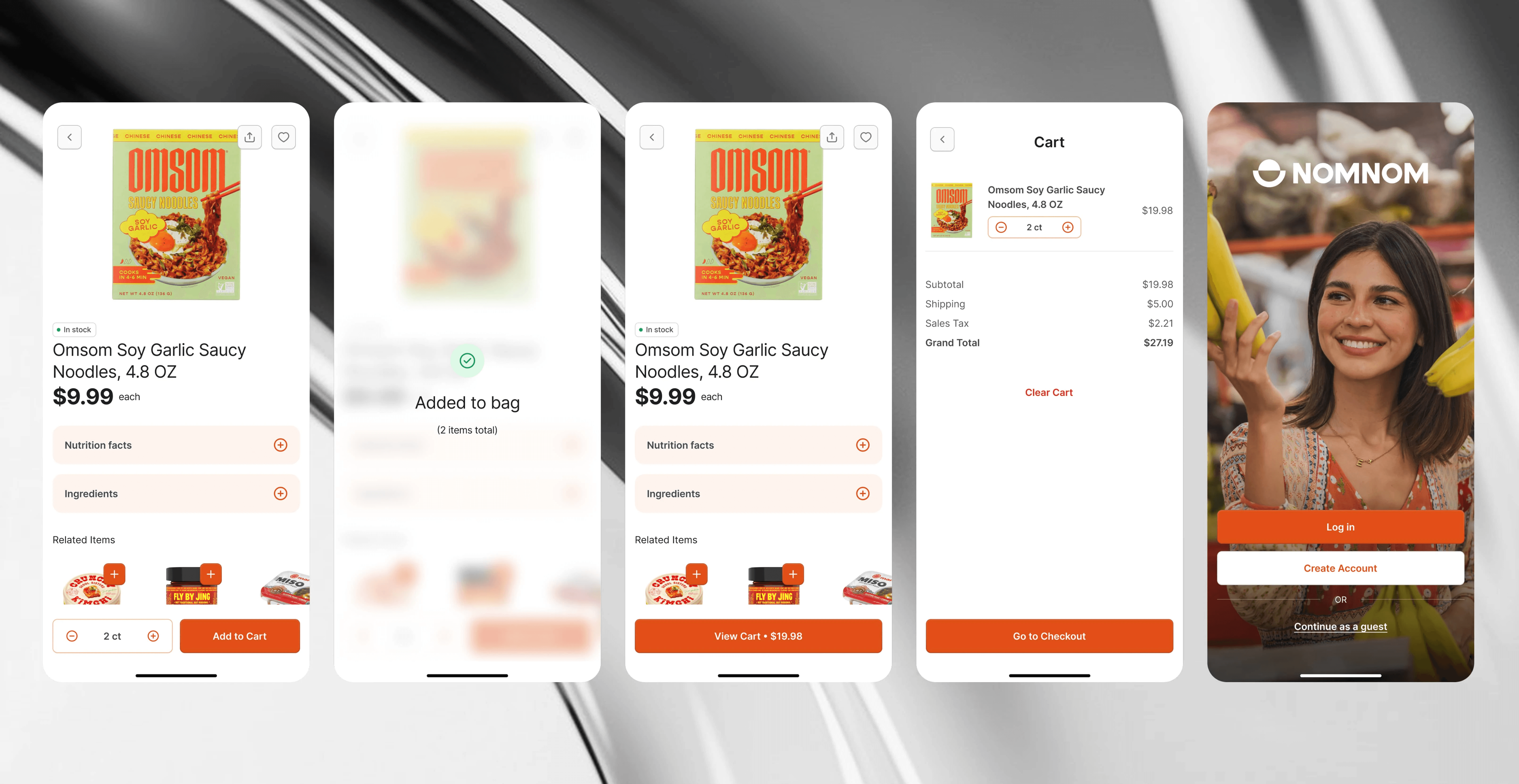
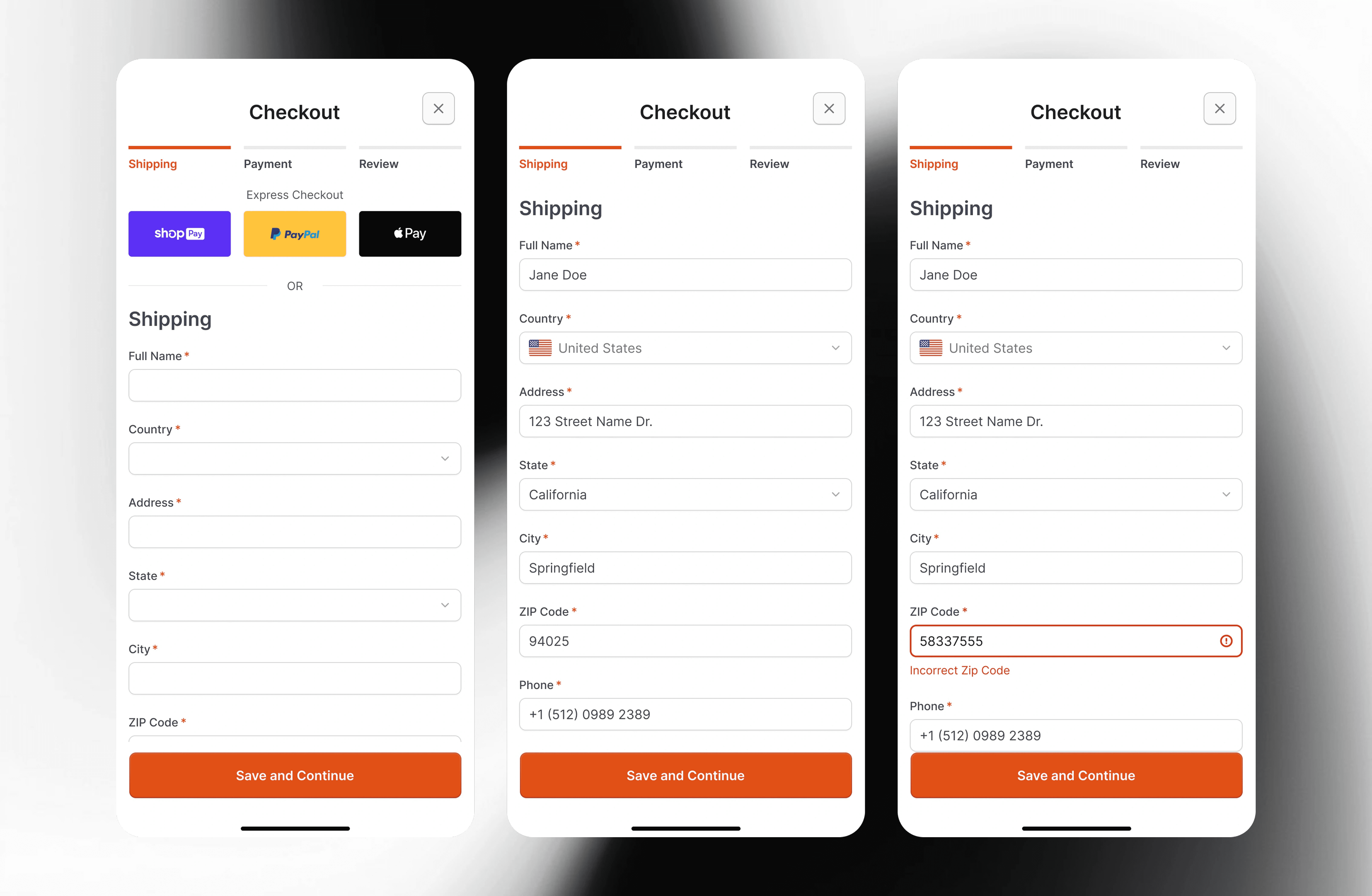
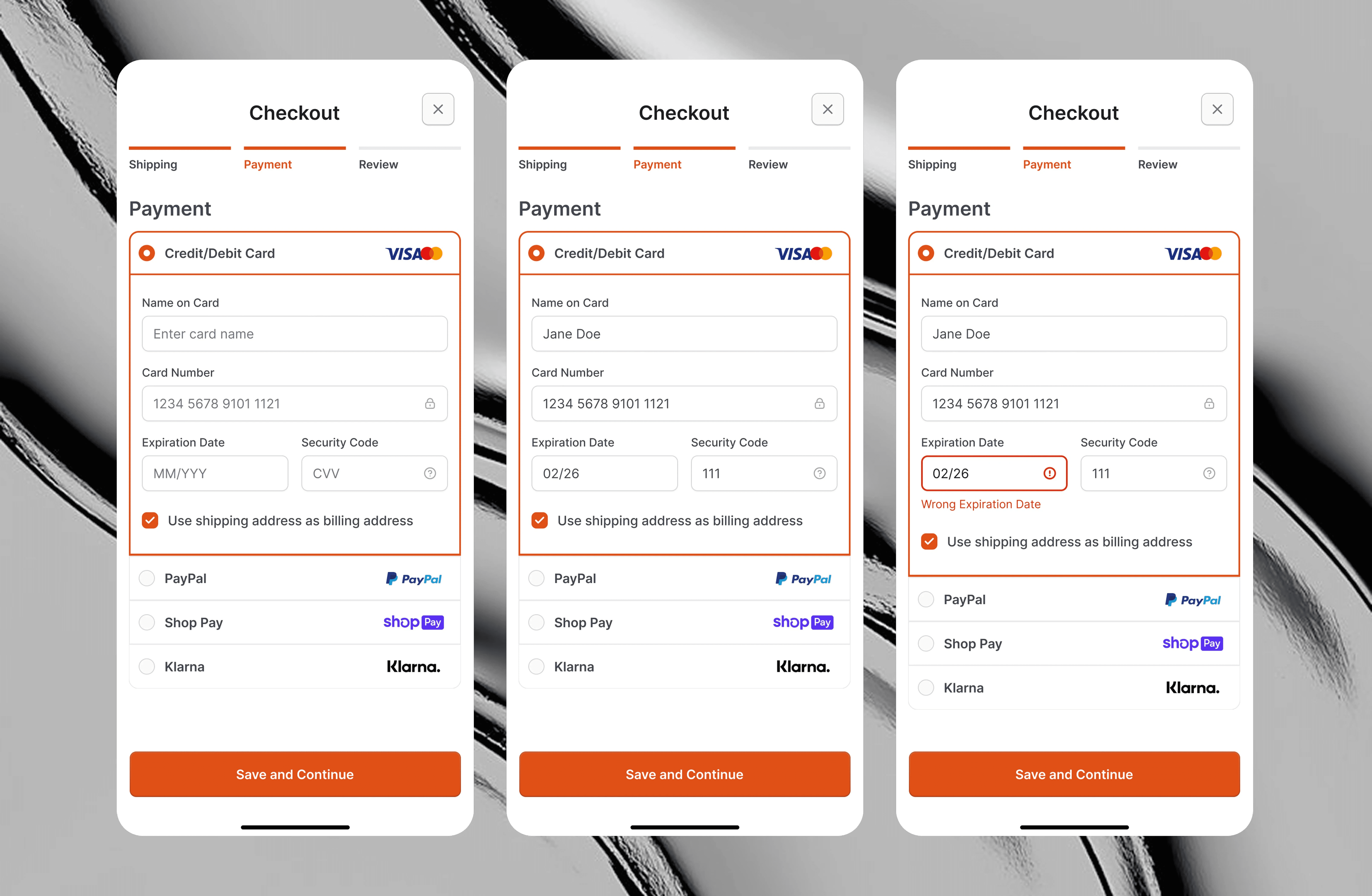
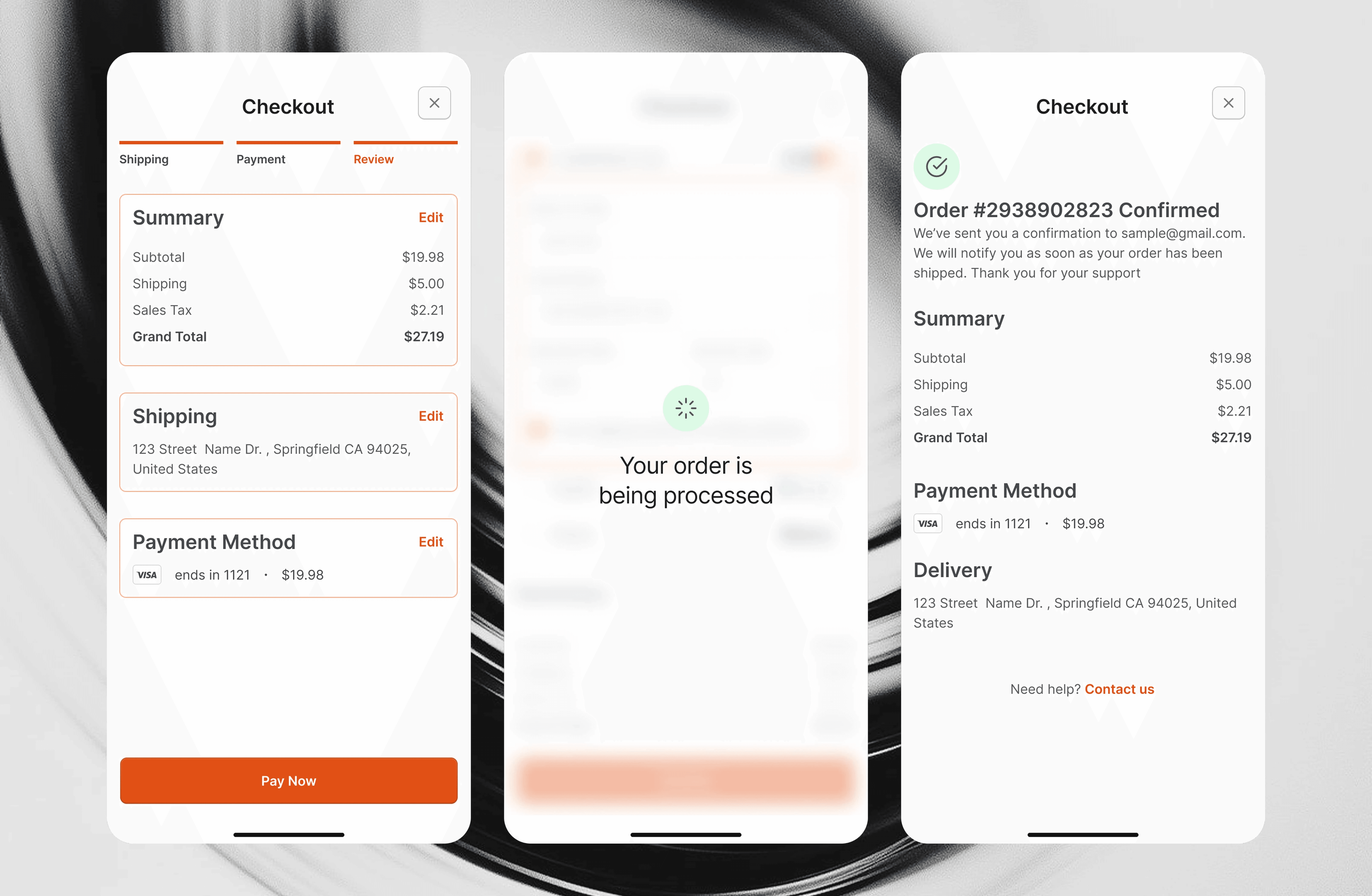
NOMNOM Guest Checkout is an end-to-end e-commerce checkout experience designed for an online grocery delivery platform. The goal of this project was to create a seamless, intuitive, and conversion-optimized guest checkout flow that minimizes friction while maintaining clarity, transparency, and user control. The experience supports users from adding products to the cart through order confirmation, with a strong emphasis on pricing transparency, progressive disclosure, and flexibility for both returning and first-time users. Since users are not logged in, the flow intentionally offers multiple paths forward, including logging in, creating an account, or continuing as a guest, allowing users to choose the option that best fits their intent without disrupting momentum. The checkout process is broken into three clearly defined steps: Shipping, Payment, and Review. A stepper indicator guides users through each stage, reducing cognitive load and providing constant visibility into system status. Express checkout options are surfaced early to support faster completion, while a condensed traditional form ensures accessibility for users who prefer a standard flow. Throughout the experience, key UX principles are applied to drive clarity and confidence, including real-time inline validation, recognizable payment methods, simplified form inputs, and editable review states. Post-purchase screens reinforce trust through clear feedback, reassurance during processing, and proactive support options upon confirmation.
Challenges:
Speed of Iteration Designing a full guest checkout flow required rapid iteration across multiple interconnected screens, including cart, shipping, payment, review, processing, and confirmation. Each change in one step directly impacted downstream states, requiring careful coordination to maintain consistency, accuracy, and usability while moving quickly. Reducing Friction for Guest Users Because users were not logged in, the flow had to minimize required inputs while still collecting essential information. Striking the right balance between simplicity and completeness was critical to avoid drop-off while maintaining trust and usability. Supporting Multiple User Paths The experience needed to accommodate returning users, new users, and guest users without overwhelming them. Designing flexible entry points, such as login, account creation, and guest checkout, while keeping a single cohesive flow presented a structural and UX challenge. Maintaining Momentum Through Checkout Preventing hesitation or abandonment during key moments, such as payment selection or final review, required thoughtful use of visual feedback, inline validation, and reassurance states that kept users confident and informed throughout the process.
Conclusion:
By breaking the checkout experience into clear, manageable steps and offering multiple paths for users to proceed, the flow reduces friction while supporting a wide range of user behaviors and preferences. Thoughtful application of UX principles, such as progressive disclosure, pricing transparency, and real-time feedback, helped create an experience that feels both efficient and reassuring. Special attention was given to guest users, ensuring they could complete their purchase quickly while still feeling informed and in control at every stage. Overall, this project highlights the ability to design complex, multi-state product flows under fast iteration cycles, while maintaining consistency, accessibility, and conversion-focused decision making. It reflects a balance between business goals and user needs, resulting in a checkout experience that is intuitive, scalable, and ready for real-world implementation.